Cages, Leashes and Chains: How Kansas State Parks Restrain Dogs
Kansas State Park visitors bringing a dog need to know what counts as an acceptable way to keep the pet restrained. The rule lists several options, but choosing among them also involves practical questions: who will manage the dog, what equipment suits the trip, and how can you avoid arriving with a setup that does not work?
The restraint rule and the options it names
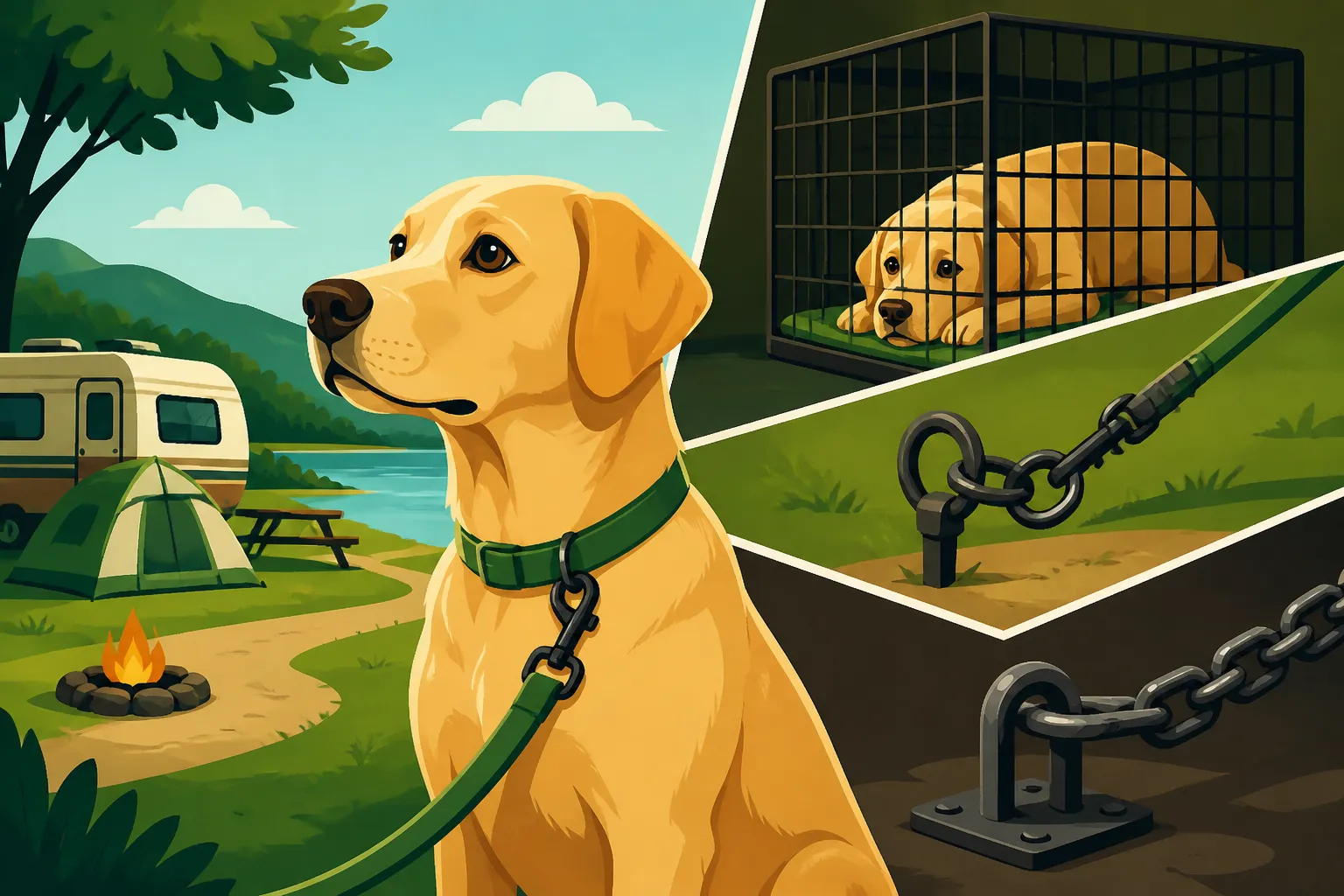
According to the Kansas Department of Wildlife and Parks, pets must be restrained by a camper, in a cage, on a hand-held leash, or on a tethered chain no longer than 10 feet.
That wording gives you several different ways to plan for a dog at a Kansas State Park. It does not describe one required piece of equipment for every visitor. Instead, it names a person-based option and equipment-based options. The right fit depends on your dog, your campsite or visit plans, and whether you can keep the chosen setup under control.
The options are not interchangeable in every practical situation. A hand-held leash requires someone to hold it. A tethered chain is attached rather than held, and the stated length limit applies to that option. A cage provides a contained space. The camper-based option relies on a person being responsible for restraining the pet. The rule states the acceptable categories, but it does not explain every detail about equipment design or what counts as adequate control in every situation.
For that reason, avoid treating the list as permission to use any piece of gear in any way. Think about the actual setup you will bring and how it will work when you arrive. If you are unsure whether a particular arrangement fits the wording, confirm the current interpretation with Kansas Department of Wildlife and Parks before the trip. The official website is the place to look for current contact details.
Here is a practical comparison:
| Restraint option | What it means for planning | What to consider |
|---|---|---|
| Restrained by a camper | A person is responsible for keeping the dog restrained | Decide who will manage the dog during activities and transitions |
| Cage | The dog is contained in a cage | Check that it is suitable for your dog and practical to bring |
| Hand-held leash | A person holds the leash | Consider whether the handler can manage the dog comfortably |
| Tethered chain | The dog is connected to a tethered chain | Keep the chain within the stated maximum length and assess the surroundings |
This summary is meant to help you think through logistics, not to add conditions to the official rule. The stated maximum length applies to a tethered chain. The rule does not give a separate leash measurement in the wording provided, so do not assume the chain limit is also a leash specification.
If you are comparing the wider pet rules before a visit, Pets in Kansas State Parks: Leashes, Tethers and Off-Limits Spots can help frame the questions to check. For broader park planning, New to Kansas State Parks? Permits, Campsites and Rules to Know covers other trip details that may affect how you organize your arrival.
Choosing a setup that suits your dog
A compliant option still has to be workable for the dog and the person responsible for it. Before choosing a leash, cage, chain, or camper-managed arrangement, consider your dog’s size, strength, temperament, and familiarity with the equipment. A setup that is comfortable and manageable in a quiet home setting may be harder to handle around unfamiliar people, activity, or outdoor distractions.
For a hand-held leash, think about the person who will hold it and the situations where they may need both hands for other tasks. If a dog pulls or reacts strongly to distractions, the handler may need to plan carefully rather than assume that any leash will make the visit easy. Make sure the leash is in good condition and that the person managing it understands the dog’s behavior.
A cage may be useful when you want a contained space, but consider whether your dog is accustomed to it. Transporting a cage, finding room for it, and helping the dog settle are practical matters to work through before arrival. Do not rely on a cage as a substitute for observing your dog’s comfort. Weather, shade, ventilation, and the dog’s need for water are sensible welfare considerations, even though the restraint wording does not spell out equipment features or care instructions.
A tethered chain involves a different kind of planning. The rule gives a maximum length for that option, but does not describe where a tether may be attached or which attachments are suitable. Think about whether the area around the dog has hazards, whether the dog can reach other people or animals, and whether the tether could catch on nearby objects. Those are practical safety checks, not additional statements of park policy. If the surroundings make the arrangement difficult to manage, choose another listed option that works better.
The camper-based option can make sense when a responsible person can actively manage the dog. It is worth deciding in advance who that person will be, especially if several people are traveling together. A group may assume that someone else is watching the dog, so a clear plan helps prevent confusion during meals, unloading, walks, or changes in activity.
You may find it useful to read Cages, Leashes and Chains: How Kansas State Parks Restrain Dogs alongside Bringing a Dog to a Kansas State Park Campsite: Leash Rules when preparing for a camping stay. The second title points to campsite-specific planning; confirm the current details with the agency rather than assuming every location or situation is identical.
Using a leash, cage, or tether responsibly
Selecting an option is only part of the task. You also need to use it in a way that keeps the dog manageable and reduces avoidable problems for other visitors. A leash can help you direct a dog through a busy area, but it does not automatically prevent pulling, lunging, or sudden movement. Pay attention to the dog and the surroundings, and be ready to adjust your route or pause when conditions become challenging.
With a hand-held leash, keep the person holding it focused on the dog. Passing other visitors, moving through a crowded area, or handling supplies can compete for attention. If the handler needs to put the leash down or step away, plan for another suitable restraint option rather than assuming the dog will stay close. That is a practical precaution, not a separate agency rule.
For a cage, check its condition before leaving home. Make sure it can be transported and used as intended, and give the dog a chance to become familiar with it before the trip if possible. A dog that is distressed by confinement may need a different plan. A cage should not be treated as a reason to stop paying attention to the animal’s comfort or surroundings.
For a tethered chain, verify its length before travel and check the setup once you are on site. Keep the chain within the maximum specified by the Kansas Department of Wildlife and Parks. Also look for potential snags, unstable attachment points, and places where the dog might become tangled. If you cannot create a safe, manageable arrangement, use one of the other options named in the rule.
Avoid letting a dog’s restraint interfere with other people’s use of a shared space. A dog may be comfortable at a distance from activity but unsettled when visitors pass close by. A handler can help by choosing a position that gives the dog room while keeping it controlled. The goal is not simply to bring equipment; it is to use the selected option consistently and responsibly.
For additional planning around walking a dog, see Dog Walks Along Kansas State Park Roads and Picnic Areas. If the question is whether a dog can be secured to a chain in a particular way, Tying Out a Dog on a Chain at a Kansas State Park is another relevant topic to review. For questions about dogs at swimming areas, Can Your Dog Swim at a Kansas State Park Beach? addresses a separate issue from restraint.
Making a plan for a campsite or day visit
Your restraint choice may change depending on what the visit involves. A day visit can include moving between places and handling bags or food. An overnight stay adds setup and campsite routines. In either case, decide how the dog will be restrained before you arrive, and bring the equipment needed for the option you intend to use.
If the dog will be managed by a camper, identify the person responsible rather than leaving the arrangement vague. Think through when that person might be occupied and how responsibility will be handed off. If you plan to use a hand-held leash, make sure it is accessible when you need it, not buried beneath other gear. If you plan to use a cage or tethered chain, inspect the equipment beforehand and consider whether it will work in the setting you expect.
A campsite can involve more distractions than a familiar home environment. Neighbors, activity, and changes in routine may affect how a dog behaves. Do not assume that a dog who is calm in one setting will respond the same way in another. Bring a setup you can manage, and be prepared to use a different listed option if the first plan is not working.
If a camper needs to leave the dog’s immediate area, consider the restraint option and circumstances rather than assuming that a leash or tether can simply be left in place. The rule includes a tethered-chain option, but the wording does not settle every question about supervision, campsite conditions, or the suitability of a particular attachment. If your intended arrangement depends on details that are not clear, ask Kansas Department of Wildlife and Parks before relying on it.
Cabin visitors may have different practical needs from tent or RV campers. The restraint requirement is about pets, while cabin use can raise additional questions about where pets may go and what accommodations allow. Do not treat a dog’s restraint method as an answer to cabin access or building rules. For those separate topics, consult Pets Inside Kansas State Park Cabins vs Public Park Buildings and Will a Kansas State Park Cabin Take Your Dog?. Confirm current requirements for the specific accommodation through the official information before finalizing plans.
For a broader comparison of trip styles, Choosing Between a Cabin and a Campsite at a Kansas State Park may help you decide which setup is more practical for your group and dog. The more clearly you separate restraint planning from questions about accommodation or access, the less likely you are to make assumptions based on one rule.
What to check before leaving home
A short equipment check can prevent last-minute problems. Inspect the leash, cage, or chain you plan to bring. Look for wear, damage, or parts that do not work as expected. If more than one restraint option may be needed, pack the alternatives rather than assuming the first choice will suit every moment of the visit.
Confirm the dog can tolerate the selected equipment. If the dog has not used a cage or tether before, introducing it during a busy trip may create stress. A dog that is difficult to manage on a hand-held leash may require a careful handling plan. Choose equipment with the dog’s behavior in mind, not only based on convenience or storage space.
It also helps to consider who is traveling with the dog. A person who knows the dog’s cues and behavior may be better suited to manage it than someone unfamiliar with the animal. If several people will take turns, make sure each understands which restraint option is being used and how to manage it. Clear responsibility reduces the chance of a leash being dropped or an arrangement being left unattended by mistake.
Before setting out, check the official information for the park and review any posted directions when you arrive. The restraint rule gives the named options, but it does not answer every question about a particular place, setup, or other pet-related restriction. If you encounter a sign or instruction that appears to affect your plans, follow up with park staff or the agency rather than relying on assumptions.
Keep separate questions separate. A dog being restrained does not necessarily answer whether it may enter a building, use a beach, or accompany you in a particular area. Those topics may have their own requirements. Review Are Pets Allowed Inside Kansas State Park Buildings and Shelters? if building access matters, and consult Day Trip With a Dog to a Kansas State Park: The Basics for other visit-planning questions.
Frequently Asked Questions
Does the rule require every dog to be on a leash?
No. The listed options include a camper-managed arrangement, a cage, a hand-held leash, and a tethered chain. Choose an option that matches the rule and that you can use responsibly.
Does the chain length limit also specify leash length?
The stated maximum is for a tethered chain. The wording does not provide a separate numerical leash length, so do not treat the chain measurement as a leash specification.
Can I use a cage instead of a leash?
A cage is one of the options named by the Kansas Department of Wildlife and Parks. Whether it is a practical choice depends on the dog, equipment, and circumstances of the visit.
What if I am not sure my setup qualifies?
Check with Kansas Department of Wildlife and Parks before relying on an arrangement that is unclear. Review the agency’s official information for current contact details and follow any applicable direction you receive.
Sources
- Kansas Department of Wildlife and Parks — Kansas State Park Rules and Regulations | Kansas Department of Wildlife and Parks – Kansas Parks and Tourism (checked November 24, 2026)
Disclaimer
This article is for general informational purposes only and does not constitute professional advice. Laws, prices and regulations vary by location and change over time. Consult a qualified professional for guidance on your specific situation. Kansas Camping & RV is not a government agency and is not affiliated with any government agency.