Is Your Kansas State Park Open? Checking Closures and Updates
Kansas state park plans can change after storms, maintenance work, seasonal transitions, or safety concerns. A park may be open while a campground, road, beach, or other facility is closed. Check the right official updates before you leave, then verify conditions again when you arrive so you can adjust your plans without relying on an old listing or reservation.
What “open” means at a Kansas state park
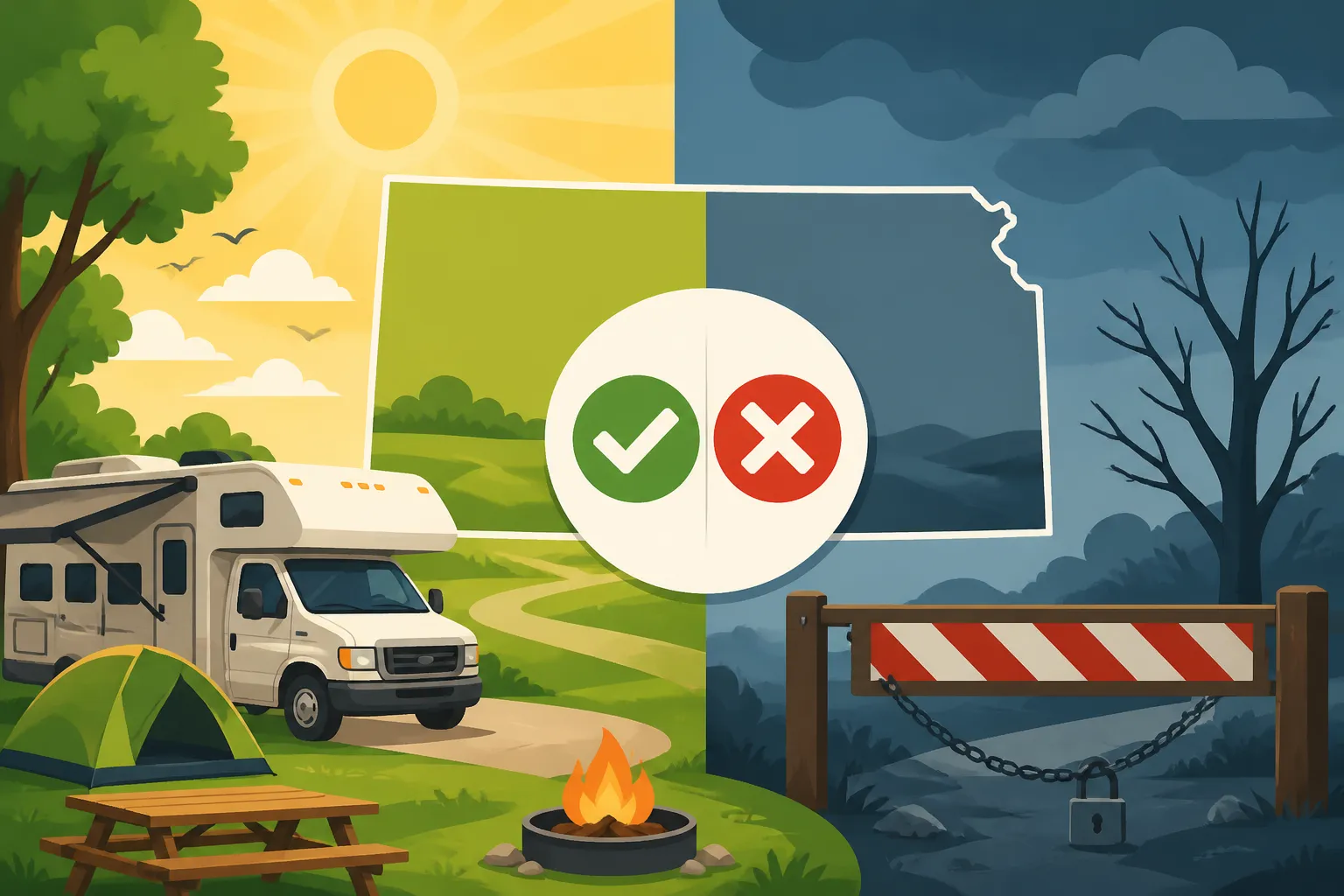
“Open” can describe several different things, and a park’s overall status does not necessarily tell you whether the place you plan to use is available. A park may welcome visitors while a particular campground loop, trail, road, swim area, or facility has a temporary closure. The key is to check the status of both the park and the specific features your trip depends on.
For planning, separate these questions:
- Is the park open to visitors?
- Can you reach the part of the park you intend to visit?
- Is your campground, campsite, cabin, or other reserved facility available?
- Are the activities you have planned allowed and accessible?
- Are there temporary restrictions that change what you can do?
A “yes” to the first question does not automatically answer the rest. For example, a park could be open for day use while a campground area is unavailable, or the park could be accessible while a storm-damaged road limits access to a particular destination. Conditions can also vary from one area of a large park to another.
Park status versus facility status
Think of the park as a collection of places and services rather than a single open-or-closed switch. Some features may be managed or maintained separately, and conditions can change at different times. A closure notice might apply to a specific road, building, campground loop, trail, boat access, beach, or other area without closing the entire park.
This distinction is especially important if your trip depends on one feature. If your main plan is swimming, check the swim area. If you have a campsite reservation, check the campground and loop, not just the general park listing. If you are driving a large RV, verify the route and access conditions for the site you booked. For help comparing site types and planning around the amenities available, see Choosing a Campsite Type in Kansas State Parks, Primitive to Utility.
A closed facility can also affect your plan without making the trip impossible. You might still be able to visit other parts of the park, but only if the posted restrictions permit it and you can reach those areas safely. Do not assume a nearby parking lot, alternate entrance, or informal route is a permitted workaround. Follow posted signs and the instructions of park staff.
Closures, restrictions, and advisories are not interchangeable
A closure means access or use is prohibited for the area or facility described in the notice. A restriction may allow access but limit an activity, route, or service. An advisory may warn about a condition that matters to your decision without itself closing the park. Read the notice closely to understand what it applies to, where it applies, and whether it gives instructions for visitors.
The practical effect matters more than the label. If a notice says a road is closed, you need to know whether that road is necessary to reach your destination. If a notice affects a campground loop, confirm whether your assigned campsite is in that loop. If the notice refers to a beach or water access point, do not assume another shoreline area is open for swimming.
Where to check official Kansas state park updates
Start with Kansas Department of Wildlife and Parks (KDWP), the state agency responsible for Kansas state parks. Use the agency’s official website to locate the page for the park you plan to visit and look for operating information, alerts, or closure notices. Park pages and alert listings are useful starting points, but always read the full notice and check its date or update details when they are provided.
For more on where to look for operating information, see Where Kansas State Parks Post Operating Updates. That article can help you understand the role of park pages and updates; the most useful source for your trip is still the current notice for the particular park and facility you plan to use.
Search by the park and the feature
A broad search for a park’s name may bring up old articles, visitor posts, or information about a different location with a similar name. Use the official agency website, then navigate to the specific park. Look for a current notice that mentions the facility or activity you care about.
Check more than one relevant page when your trip depends on several things. A campsite reservation page may show booking details, while a park update may describe a road or campground closure. A general park page may list available amenities without indicating a short-term disruption. Treat each source as one part of the picture rather than assuming that a single page covers every operational change.
When you find an alert, check:
- The location: Does it identify the entire park, a particular campground, a road, or another area?
- The affected use: Does it apply to driving, camping, swimming, boating, trail access, or another activity?
- The timing: Does the notice provide dates, a start time, an end time, or a statement that conditions will be updated?
- The visitor instructions: Does it direct people to avoid an area, use a different route, or take another action?
- The update status: Is the information clearly current, or could it be an older notice that needs confirmation?
If a notice does not answer the question you need answered, use the official website to find current park contact details. Ask a specific question rather than simply asking whether the park is open. For example: “Is the campground loop with my reservation accessible?” or “Is the beach open for swimming?” Specific questions make it easier to identify whether the issue is the whole park or only one facility.
Reservations and listings are not a substitute for closure checks
A reservation confirms a booking, not necessarily that every route, service, or activity at the park will be available when you arrive. If you have booked a campsite or cabin, check the reservation details and current park updates separately. If a closure affects your booking, follow the instructions provided by the reservation system or park staff rather than assuming that the reservation will automatically change.
For help understanding the booking process, see Booking a Kansas State Park Campsite: Accounts, Payment and Renters. If you are planning a cabin stay, How Kansas State Park Cabin Reservations Work Year-Round covers the reservation side. Neither a booking confirmation nor an old search result should be treated as a live operating update.
A third-party map, travel listing, or social post may be useful for general orientation, but it can lag behind official notices. Use it to find a park, not to make the final call about a closure. For a broader explanation of how to check park status, see Is Your Kansas State Park Open? Checking Closures and Updates—not applicable as own title. Cannot link own. Instead omit. Need another valid internal link. “Road Trip Through Several Kansas State Parks: Permit Planning” maybe a tangent. After a Storm: Checking a Kansas State Park Before You Drive useful later. We have 3 links including location and reservation. Good.
A reliable check-before-you-go routine
A quick routine can catch many of the surprises that disrupt a trip. Use it when you first make plans, repeat it shortly before departure, and check again as you enter the park. The closer you are to leaving, the more important it is to rely on current official information rather than notes saved from an earlier planning session.
- Name the park and your destination within it. Write down the park, campground or facility, and any road or activity that is essential to your visit.
- Open the official park page. Look for operating updates, alerts, or links to current notices on the KDWP website.
- Read each relevant notice in full. Confirm the affected location, activity, and timing instead of relying on a headline or brief search result.
- Check your reservation separately. Confirm the dates, site or unit, and any instructions in your booking details.
- Check conditions again before departure. A notice that was accurate when you planned the trip may not describe conditions after a storm, repair, or other change.
- Recheck when you arrive. Read posted signs at the entrance and at the campground or activity area. Follow newer instructions if they differ from information you saved.
- Adjust safely if needed. Do not enter a closed area or try an unmarked route to reach a destination. Contact park staff through current details on the official website if you need clarification.
The best timing depends on your trip. For a routine day visit, check before setting out and again on arrival. For an overnight stay, do the same and take extra care if weather, road access, or a specific campground feature is central to your plan. For a long drive, check close enough to departure that you can still change your route or choose a different stop.
Ask questions that match your plans
A useful closure check is not just “Is the park open?” It is a short list of questions tied to the decisions you need to make. If you are camping, ask whether your campground and site area are accessible. If you are going to swim, ask about the designated swim area. If you are visiting for a trail or boat access, ask about that specific feature and the route to it.
Here is a compact checklist:
| Your plan | What to verify |
|---|---|
| Day visit | Park access, roads, parking, and the area you plan to visit |
| Campsite stay | Campground and loop access, your reserved site, and relevant services |
| Cabin stay | Cabin availability, access roads, and any affected amenities |
| Swimming | Status of the designated swim area and any posted restrictions |
| Trail or outdoor activity | Trail or area access, closures, and route conditions |
| RV trip | Access to the campground and whether the route suits your vehicle |
| Visit after severe weather | Road access, damaged areas, and current instructions |
This checklist is a planning aid, not permission to use a closed or restricted area. If the official notice is unclear, get clarification before relying on an assumption.
Why Kansas state parks may change access or operations
Closures and updates can result from many kinds of conditions. Some are planned, such as maintenance or seasonal operations. Others happen with little warning, including damage from severe weather, unsafe conditions, or a problem with a facility. The reason helps explain why one part of a park may be affected while another remains available, but it does not change the need to follow the notice.
Weather and storm damage
Storms can affect roads, trails, trees, utilities, shoreline access, and buildings. Even after the weather passes, cleanup and safety checks may take time. A park can appear calm at one entrance while a particular route or area remains blocked or unsafe. Do not use a lack of visible damage near the gate as evidence that the whole park is accessible.
If a storm is part of your travel plans, check the official update before driving and again when you arrive. After a Storm: Checking a Kansas State Park Before You Drive focuses on that situation. If conditions are still changing, avoid making a long detour based on an assumption that a road or facility will reopen by the time you get there.
Repairs and maintenance
Maintenance can temporarily affect roads, buildings, campground facilities, or other visitor services. A project may be scheduled or extended, and its impact may be limited to a particular part of the park. Read the notice for the specific location and any dates or instructions it provides.
If a service is important to your stay, confirm its status rather than inferring it from the park’s general amenity list. A facility appearing on a park webpage does not guarantee that it is operating on the day you visit. When a closure affects a campsite or reserved unit, use the official reservation channel and park contact information for guidance about your booking.
Seasonal operations
Some activities and facilities operate differently across seasons. Availability can vary with weather, staffing, maintenance, or the way a facility is managed. A feature listed for a park may not be available year-round, and an older visitor account may describe a season that does not match your travel dates.
Use Seasonal Openings at Kansas State Parks: What Closes Off-Season to think through off-season changes. For winter planning, Winter Camping at Kansas State Parks: Which Facilities Stay Open can help you identify the questions to confirm before setting out. Even when a facility usually operates during a given season, check the specific park’s current notice.
Safety and temporary restrictions
Park managers may issue temporary instructions when conditions make an area unsafe or when visitors need to avoid interfering with operations. Signs and official notices take priority over a general expectation that an area is normally open. If an area is marked closed, do not enter it to see whether the restriction still seems necessary.
Some conditions affect activities rather than access to the park itself. Fire restrictions, for example, can change what visitors may do at a campsite. They are separate from a park-wide closure and must be checked through the appropriate official notices. Before a trip where a campfire is part of the plan, read Park Alerts to Read Before Lighting a Fire at a Kansas State Park and check applicable updates before leaving and again when you arrive.
What to do when a closure affects your visit
First, confirm the scope of the closure. Read the official notice and check whether it applies to your entire destination or only one part. If the notice is unclear, contact the park using current details on the agency’s official website. Do not rely on a guess based on an old map, a past visit, or someone else’s social post.
Then decide whether your trip still works. If the closed feature is optional, check whether other areas are open and whether you can reach them using permitted routes. If your main reason for visiting is affected, consider changing your plans rather than arriving with an expectation that staff will be able to make an exception.
If you have a reservation
Check your reservation account and messages for any information related to the affected stay. Follow the directions provided by the reservation system or park staff. If the official notice says your campsite, campground, or cabin is closed, do not assume that you can use a nearby site or facility instead. Confirm any proposed change through the official channel.
For a reserved campsite, review What to Have Ready When You Check In at a Kansas State Park Campground so that your arrival information is organized. If you expect to arrive after office hours, After-Hours Arrivals at Kansas State Parks: Permits and Check-In may help you plan the check-in questions, but it does not replace checking current access updates.
Do not treat a reservation as authorization to enter a closed area. If the route to your site is blocked or signs direct visitors elsewhere, stop and follow posted instructions. For questions about cancellation or changes, use the official reservation system and the terms shown there; procedures can depend on the booking and current policy.
If you are making a day trip
Keep a flexible backup plan, especially if your visit depends on one beach, trail, or road. If that feature is closed, do not assume another area is open or suitable. Check the official information for alternatives and respect any restrictions on access, parking, and activities.
If you decide to visit another park, check that park’s status independently. A closure at one location does not tell you whether another location is open, and travel conditions may differ. Day Trips to Kansas State Parks: Permits, Beaches and Picnics can help with general day-visit planning, but current operating updates should guide the final decision.
If the park remains open but your planned activity does not, decide whether the remaining options are worth the drive. It is better to make that decision before setting out than to discover at the entrance that the only feature you intended to use is unavailable.
If information conflicts
When sources disagree, prioritize current official information and posted instructions at the park. A booking page, general amenities list, old map, or visitor review may not reflect a recent change. If the conflict could affect safety or access, contact the park through current official contact details before traveling.
At the entrance, follow posted notices even if you checked online earlier. Conditions can change, and signs may provide the most immediate instructions for a particular road or facility. If a sign is unclear, do not cross a barrier or enter a restricted area while trying to work it out. Ask park staff for direction.
Making your own trip update plan
A simple plan prevents a closure check from becoming a last-minute scramble. Keep the official park page and your reservation information easy to find. Note the name of the campground or facility, the route you expect to use, and the activities that matter most. If the plan changes, check the new destination rather than assuming the original search covered it.
For trips that involve several parks, make a separate status check for every stop. Each park may have different facilities, access routes, and updates. Road Trip Through Several Kansas State Parks: Permit Planning addresses broader multi-park planning, while the operational check still needs to be made for each destination.
It also helps to decide ahead of time what would make you change plans. For example, you might choose not to travel if the campground is closed, if the only road to your destination is blocked, or if the activity that motivated the trip is unavailable. This is a personal planning choice, not a park rule. The important point is to make the decision using current information and not to depend on access that has been closed.
Before leaving, make sure everyone in your group knows the destination and the backup plan. If you are traveling with children, older adults, or someone who depends on a particular facility, verify access and amenities that affect comfort or mobility. Accessible Visits to Kansas State Parks: Permits and Planning can help you identify accessibility questions to ask, but confirm the status of the specific area with the park.
At arrival, take a moment to read signs before driving deeper into the park. A familiar entrance or campground can have different instructions from your last visit. Do not remove barriers, pass closure signs, or park in a way that blocks staff or other visitors. If an update directs traffic away from an area, follow it even if your navigation app still shows the old route.
Frequently Asked Questions
Does an open park mean every campground and facility is open?
No. A park can be open while a specific campground, road, beach, trail, or service is closed or restricted. Check the status of the facility you plan to use, not only the park’s overall status.
Is a campsite reservation proof that the campground will be open?
A reservation confirms your booking details, but it is not a live operating update. Check current park notices and your reservation information separately, and follow official instructions if a closure affects your stay.
How close to departure should I check?
Check when you begin planning, again shortly before leaving, and once more when you arrive. If severe weather or another changing condition affects your route, check as close to departure as practical.
What should I do if the website does not answer my question?
Use the official KDWP website to find current contact details for the park and ask about the specific campground, road, facility, or activity you need. Avoid relying on outdated listings or informal reports when access is uncertain.
Disclaimer
This article is for general informational purposes only and does not constitute professional advice. Laws, prices and regulations vary by location and change over time. Consult a qualified professional for guidance on your specific situation. Kansas Camping & RV is not a government agency and is not affiliated with any government agency.