Pets in Kansas State Parks: Leashes, Tethers and Off-Limits Spots
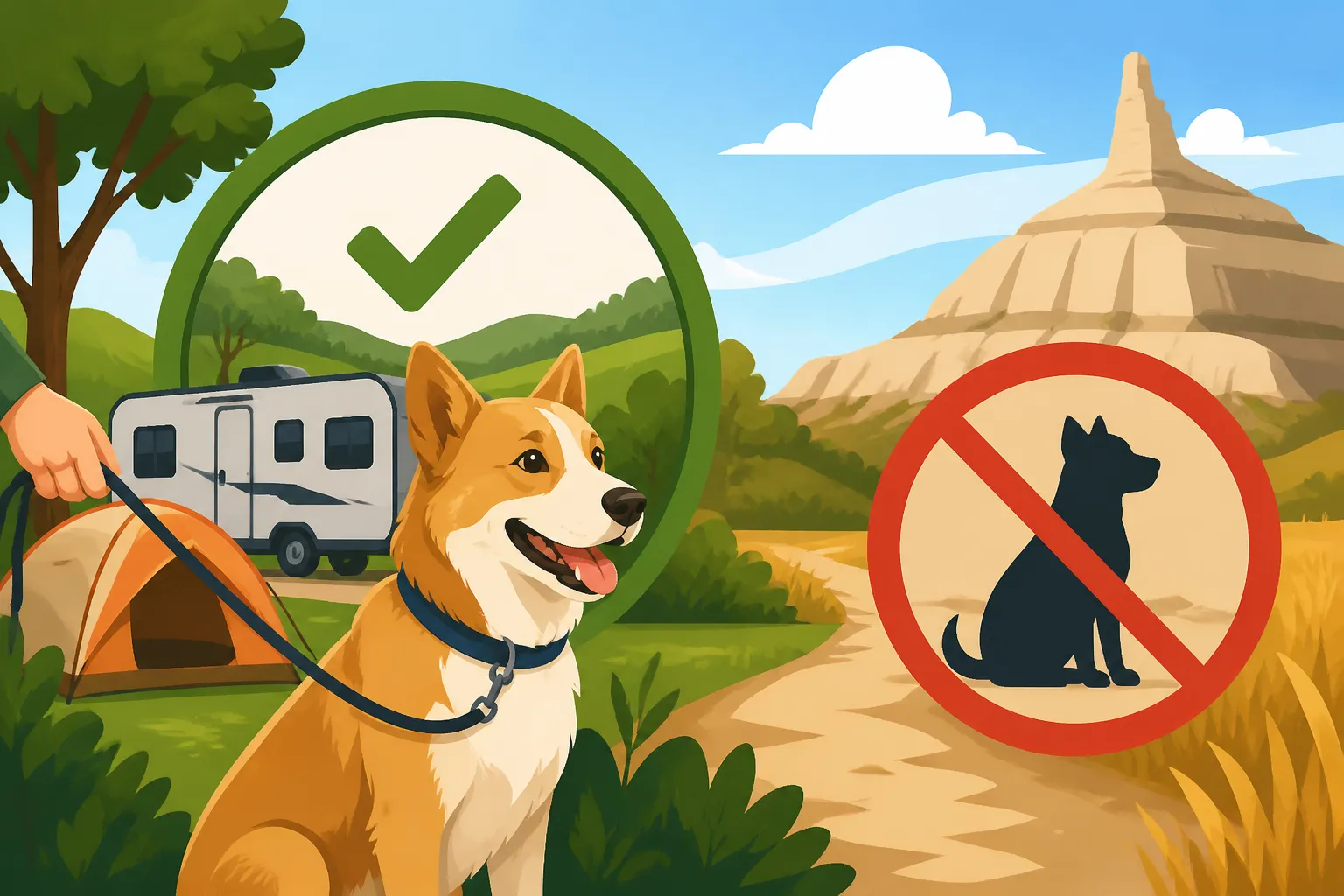
Bringing a pet to a Kansas state park takes more than packing food and a water bowl: you need a restraint that meets the state rule and a plan for places where pets may not be allowed. The key is to separate the statewide requirement from park-specific restrictions, then check official information and signs before deciding where your pet can go.
Start With the Statewide Restraint Rule
According to the Kansas Department of Wildlife and Parks, pets in state parks must be restrained by a camper, cage, hand-held leash, or tethered chain no longer than 10 feet.
That is the essential starting point for choosing how to manage a pet during a visit. It gives several ways to restrain an animal, but it does not mean every method will be suitable in every situation. A hand-held leash, for example, keeps a person connected to the pet and allows for movement through shared spaces. A cage may work when a pet is resting or traveling, depending on the circumstances. A tethered chain is another listed option, but its maximum length is a firm limit, not a suggested target to exceed.
The wording also matters: a pet must be restrained by one of the listed means. A pet that is nearby but not actually held, contained, or tethered is not being managed in one of those ways. It is safer to have the appropriate restraint ready before leaving a vehicle or campsite rather than searching for equipment after reaching a busy area.
The statewide rule is a baseline, not a promise that pets may enter every park facility or recreation area. A state park may have restrictions for particular locations, and posted notices can provide important information at the place where a restriction applies. For help understanding other park requirements, see Rules Inside Kansas State Parks, From Speed Limits to Campfires and Posted Restrictions in Kansas State Parks: Reading Signs on Arrival.
A useful distinction is:
- Statewide restraint requirement: The pet must be restrained by one of the methods named by the Kansas Department of Wildlife and Parks.
- Location-specific access: Whether a pet may enter a particular area must be checked separately.
- Practical choice: The restraint should fit the pet, the activity, and the surroundings, while still meeting the rule.
Do not treat a pet’s good recall or calm temperament as a substitute for the required restraint. Those qualities can help make a visit easier, but they do not change the stated requirement. Likewise, do not assume a pet-friendly campsite means every nearby building, beach, trail, or gathering area is also open to pets. Confirm the rules for the places you plan to use.
If the pet is not a dog, the same statewide wording still refers to pets. Check that the equipment you plan to use is appropriate for the animal and acceptable for your intended locations. For questions about a particular situation, use the Kansas Department of Wildlife and Parks’ official information or ask the park through its official contact channels.
Choosing Between a Hand-Held Leash, Cage, and Tether
The allowed restraint options are not interchangeable in practical use. Think about where you will be, how the pet responds to activity around it, and whether you need to move frequently. The table below compares the options as planning choices, not as additional park rules.
| Restraint option | When it may suit your plan | What to consider before leaving |
|---|---|---|
| Camper holding the pet | Moving with the animal in a setting where you can maintain control | Whether you can keep a secure hold while handling other gear or attending to other people |
| Cage | Keeping a pet contained while it rests or waits | Whether the cage is suitable for the pet and the place you intend to use it |
| Hand-held leash | Walking or moving with a pet through areas where pets are permitted | Whether the leash is comfortable to hold and gives you practical control in a shared space |
| Tethered chain | Keeping a pet secured in a place where tethering is appropriate | Whether the chain meets the stated length limit and whether the location allows this setup |
A leash is often the most flexible choice for moving around, but flexibility does not remove the need to check location restrictions. A route may pass through a place where pets are not permitted, or a sign may require visitors to follow a different arrangement. If your plan depends on walking with a pet, check the full route rather than only the destination.
A cage can be useful for containment, but it is not automatically suitable for every setting. Consider whether the pet can remain comfortable and secure, whether the cage can be placed without blocking other people, and whether the location permits pets at all. The statewide restraint rule names a cage as an option; it does not establish that a cage makes every area pet-accessible.
Tethering also calls for judgment. The maximum length in the state rule does not tell you whether a specific location is suitable for a tether, or whether the pet will remain settled there. Consider nearby foot traffic, other animals, the pet’s tendency to pull or tangle, and whether someone can keep an eye on the animal. Avoid relying on a tether as a way to leave a pet unattended while you go elsewhere.
Before a trip, test the restraint at home. Check that clips, closures, and handles work and that the pet is accustomed to the equipment. If the animal becomes distressed or difficult to manage, adjust your plan rather than waiting until you are in a crowded park setting. Bring the restraint you expect to use, along with a backup option when practical.
For dog-specific details about the way Kansas state parks describe restraints, Cages, Leashes and Chains: How Kansas State Parks Restrain Dogs is a useful companion. If you are planning an outing rather than an overnight stay, Day Trip With a Dog to a Kansas State Park: The Basics can help you think through the practical details.
Check Access Before You Bring a Pet Into an Area
The restraint requirement answers how a pet must be managed; it does not answer where the pet is allowed. That distinction is especially important when an outing includes several kinds of places. A campsite, a public building, a swimming area, a picnic spot, and a trail may have different conditions. Do not assume that access in one place carries over to another.
Before choosing an itinerary, identify the specific places you hope to visit. Then look for official information about pets at those locations and read posted signs when you arrive. If the information is unclear, ask the park using its official contact details. A general statement that a park welcomes visitors with pets is not enough to settle whether a particular facility or activity area is open to them.
This is not a reason to avoid planning. It is a reason to make a flexible plan. You can select pet-appropriate places in advance, keep an alternate route in mind, and avoid building the whole day around an area whose rules you have not confirmed. If one stop is not suitable for the pet, having a reasonable alternative can prevent a rushed decision at the entrance.
Pay particular attention when your plan involves:
- Buildings and shelters: Check whether the specific building or shelter allows pets. Are Pets Allowed Inside Kansas State Park Buildings and Shelters? covers this question, while Pets Inside Kansas State Park Cabins vs Public Park Buildings addresses the difference between overnight lodging and public facilities.
- Swimming and shore areas: Do not infer pet access from the fact that people are swimming or gathering near the water. Confirm the rules for the exact area. For related planning, see Can Your Dog Swim at a Kansas State Park Beach? and Swimming Beaches at Kansas State Parks: Alcohol, Glass and Dogs.
- Picnic areas: Look for any posted restrictions and plan how you will keep the pet under control around other visitors. Cleaning Up After Your Dog at Kansas State Park Picnic Areas is relevant to this part of the visit.
- Trails and paths: Confirm whether pets are permitted on the route you intend to use. A nearby campsite or open area does not establish access to every path.
- Events or shared recreation spaces: Check whether the activity or gathering has its own restrictions instead of relying on the general park rule.
When reading a sign, follow what it says for that place. If a restriction is unclear, do not guess that the statewide restraint rule overrides it. The restraint requirement and a local access restriction address different questions: one concerns how the pet is controlled, and the other concerns whether the pet may enter that location.
Park conditions and access information can change. Check Is Your Kansas State Park Open? Checking Closures and Updates before traveling, and review current official updates for the locations on your itinerary. On arrival, read signs again. A pre-trip check helps with planning, while a sign at the location may communicate a restriction that matters right then.
Plan the Campsite and Overnight Stay Around the Pet
A campsite can be a convenient base for a pet-friendly trip, but having a site does not settle what the pet can do throughout the park. Before reserving, consider whether the campground and the rest of your itinerary work together. Check pet-related restrictions for the site or lodging you are considering, and confirm the rules for nearby facilities and recreation areas separately.
For a campsite, decide how you will handle ordinary transitions: getting the pet in and out of the vehicle, moving between the camping area and other destinations, and keeping the animal restrained while you organize equipment. It helps to have the leash or other planned restraint where it is easy to reach. That reduces the temptation to let the pet move freely while you unload or look for supplies.
Think about the pet’s needs as well as the rules. A busy campground can involve unfamiliar sounds, people passing nearby, and other animals. A pet that is relaxed at home may respond differently in a new environment. If the pet is easily startled, reactive, or likely to pull, choose equipment and routes that make it easier to maintain control. Give yourself enough time to settle in before taking the animal through busier parts of the park.
For overnight stays, distinguish between a campsite and an indoor accommodation. Rules for pets in a cabin or another building may differ from rules for pets in outdoor spaces. Verify the policy for the specific accommodation before making plans. The existence of a pet-related option at one lodging facility does not establish that every cabin or public building allows pets. Finding Pet-Friendly Cabins in Kansas State Parks and What Rules Come With Renting a Kansas State Park Cabin? can help you identify what to confirm.
Pack for a stay that may require you to change plans. Useful items can include:
- The restraint you intend to use, plus backup equipment if practical.
- A secure way to transport the pet between places.
- Food, water, and familiar supplies for the animal.
- Waste bags and a plan for disposing of waste appropriately.
- A place for the pet to rest away from crowded activity.
- Current vaccination and identification information, as appropriate for your own trip planning.
These are preparation suggestions, not additional statewide park requirements. Check the park’s official information for any specific instructions that apply to the campsite or accommodation.
If your chosen park is closed in part, has a facility unavailable, or has other changes affecting your plan, do not assume that a pet-related destination remains accessible just because the campground itself is operating. Review official updates and be ready to choose another activity. The same principle applies when a reservation is confirmed: it confirms the reserved stay, not necessarily access to every nearby place with a pet.
Manage Shared Spaces With Courtesy and Control
A pet-friendly visit depends on more than selecting the right equipment. Parks are shared spaces, and other visitors may be uncomfortable around animals, may be traveling with pets of their own, or may need room to pass. Staying attentive helps prevent avoidable conflicts and makes it easier to follow signs or adjust your route.
Keep your pet close enough for you to respond promptly when people or animals approach. A leash in hand is only useful if you are paying attention to the animal and the surroundings. Avoid letting the pet approach strangers or other animals without the other visitor’s agreement. Even a friendly pet can surprise someone, and an unfamiliar animal may react in a way you cannot predict.
At a campsite, consider how your setup affects the people nearby. Keep restraint equipment from blocking a walkway or extending into a neighbor’s space. If a pet becomes restless, barks persistently, or reacts to campground activity, take steps to settle the animal or move to a quieter location if permitted. This is practical campground courtesy rather than a claim about a particular noise rule.
A few habits make shared areas easier to manage:
- Have the pet under control before opening a vehicle door or entering a busy space.
- Keep attention on the animal instead of relying on equipment alone.
- Give other visitors room to pass without forcing them close to the pet.
- Do not let the pet investigate another campsite or someone else’s belongings.
- Watch for signs that the pet is stressed, overheated, tired, or overstimulated.
- Change plans if the pet is not coping well with the surroundings.
If someone asks for space, respond calmly and move the pet away when you can. If a posted notice prohibits pets in an area, leave that area with the animal rather than trying to negotiate the restriction at the sign. If you cannot tell whether a place is open to pets, use an alternative until you can confirm the rule.
Clean up after the pet and carry the supplies needed to do so. Do not assume that a bin will be available at every stopping point. Planning for waste is part of being ready for a visit, especially when you will be away from your vehicle for a while. For the specific question of cleanup around picnic areas, see Cleaning Up After Your Dog at Kansas State Park Picnic Areas.
Water activities need their own planning. A pet that enjoys water is not automatically permitted at every beach or swimming area. Confirm the location’s rules before approaching the water, and do not use a nearby open shore as evidence that the designated swimming area allows pets. The same care applies to trails, shelters, and other places where visitors gather.
Use a Simple Verification Routine Before and During the Visit
The most reliable way to avoid confusion is to check the general rule, confirm the places on your itinerary, and then read notices at the park. This is more useful than relying on an old memory, a general description, or another visitor’s account. A restriction may apply to one location without applying to another, and information that was correct for a previous visit may not cover current conditions.
Before leaving, use this routine:
- Choose the park and activities. List the campsite, buildings, trails, beaches, picnic areas, and other stops you plan to use.
- Check official park information. Look for pet-related conditions and any notices that affect your planned locations.
- Confirm unclear details. Contact the park through official channels if you cannot determine whether the pet may enter a particular area.
- Prepare the restraint. Choose a method from the statewide options and check that it works for your pet and planned activities.
- Make an alternate plan. Decide what you can do if a location is restricted, closed, or unsuitable for the animal.
- Read signs on arrival. Check notices at the campground and at the specific places you visit.
- Adjust as needed. If a sign or staff direction changes your plan, follow it and choose an appropriate alternative.
This routine helps separate facts from assumptions. A park’s broad pet information may explain the basic approach, but the rules for a beach, building, or other specific destination can require a closer check. A reservation confirmation, campsite map, or travel itinerary also does not replace checking pet access.
If you are visiting several areas in one trip, verify each one separately. Do not assume that a rule at one state park applies identically at another. For campground planning, Choosing a Campsite Type in Kansas State Parks, Primitive to Utility can help with site selection, and Comparing Kansas State Parks for Camping: Shade, Scenery, Access can help you weigh broader trip preferences. Keep pet restrictions as a separate part of that comparison.
When in doubt, ask a direct question: “Can my pet go to this specific place, and what restraint must I use there?” That is clearer than asking only whether the park is pet-friendly. If you need current contact details, use the official website rather than relying on an old directory or a third-party listing.
Frequently Asked Questions
Does a pet have to be on a leash in a Kansas state park?
Not necessarily. The Kansas Department of Wildlife and Parks names a camper, cage, hand-held leash, or tethered chain within the restraint requirement. Choose an option that meets the rule and works for the pet and location.
Does the statewide restraint rule mean pets can enter every park area?
No. Restraint and access are separate questions. Check official information and posted signs for the specific building, beach, trail, or other place you want to visit.
Can I leave my pet tethered while I go somewhere else?
Do not treat tethering as permission to leave a pet unattended. The statewide wording identifies a tethered chain as a restraint option, but it does not establish that every location permits tethering or that leaving a pet alone is appropriate. Confirm the location’s rules and keep the animal’s welfare in mind.
Where can I check whether a particular state park is open to pets?
Start with the Kansas Department of Wildlife and Parks’ official information for the park and look for notices at the location. If access remains unclear, contact the park through its official channels.
Sources
- Kansas Department of Wildlife and Parks — Kansas State Park Rules and Regulations | Kansas Department of Wildlife and Parks – Kansas Parks and Tourism (checked November 24, 2026)
Disclaimer
This article is for general informational purposes only and does not constitute professional advice. Laws, prices and regulations vary by location and change over time. Consult a qualified professional for guidance on your specific situation. Kansas Camping & RV is not a government agency and is not affiliated with any government agency.